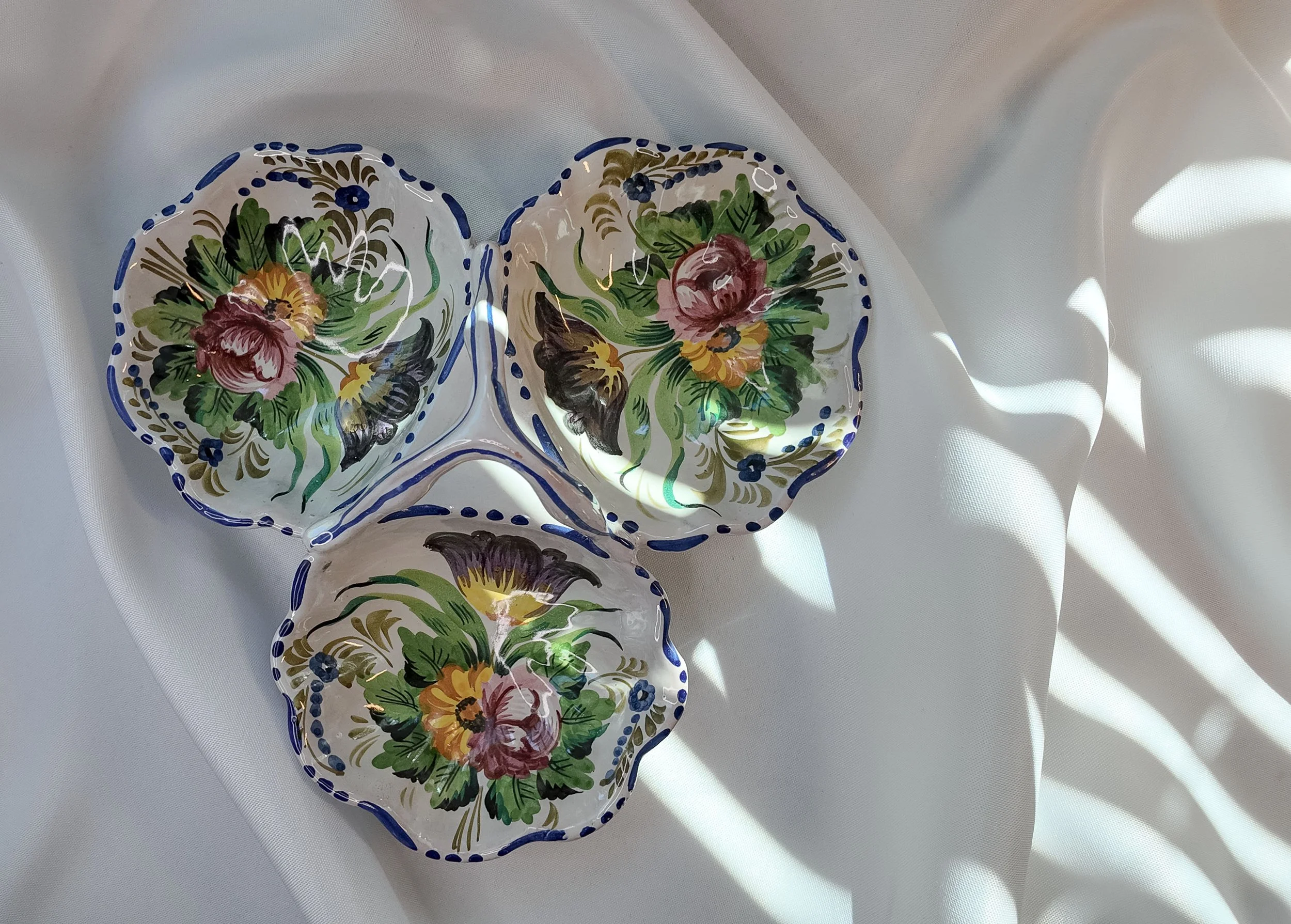
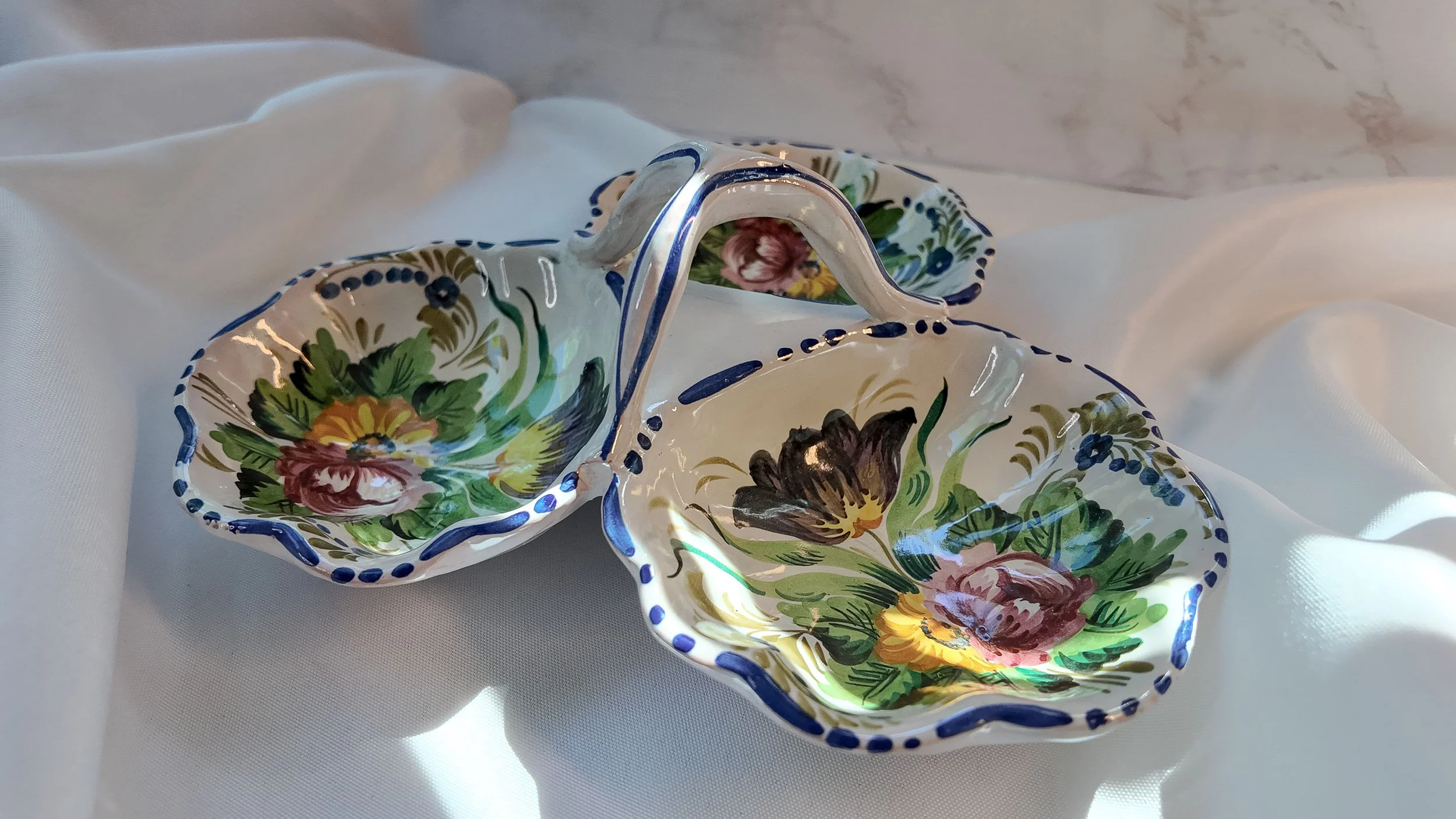
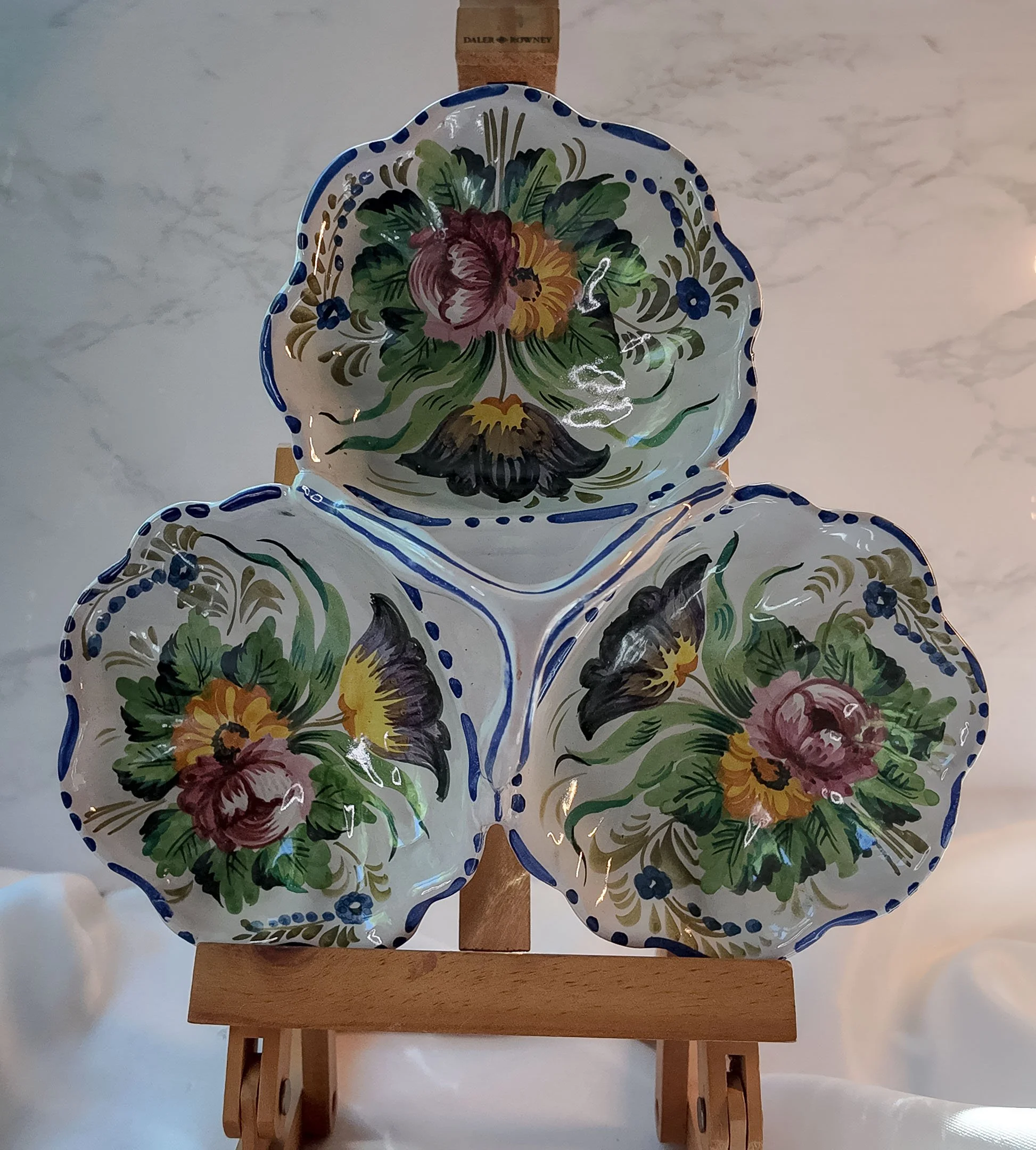
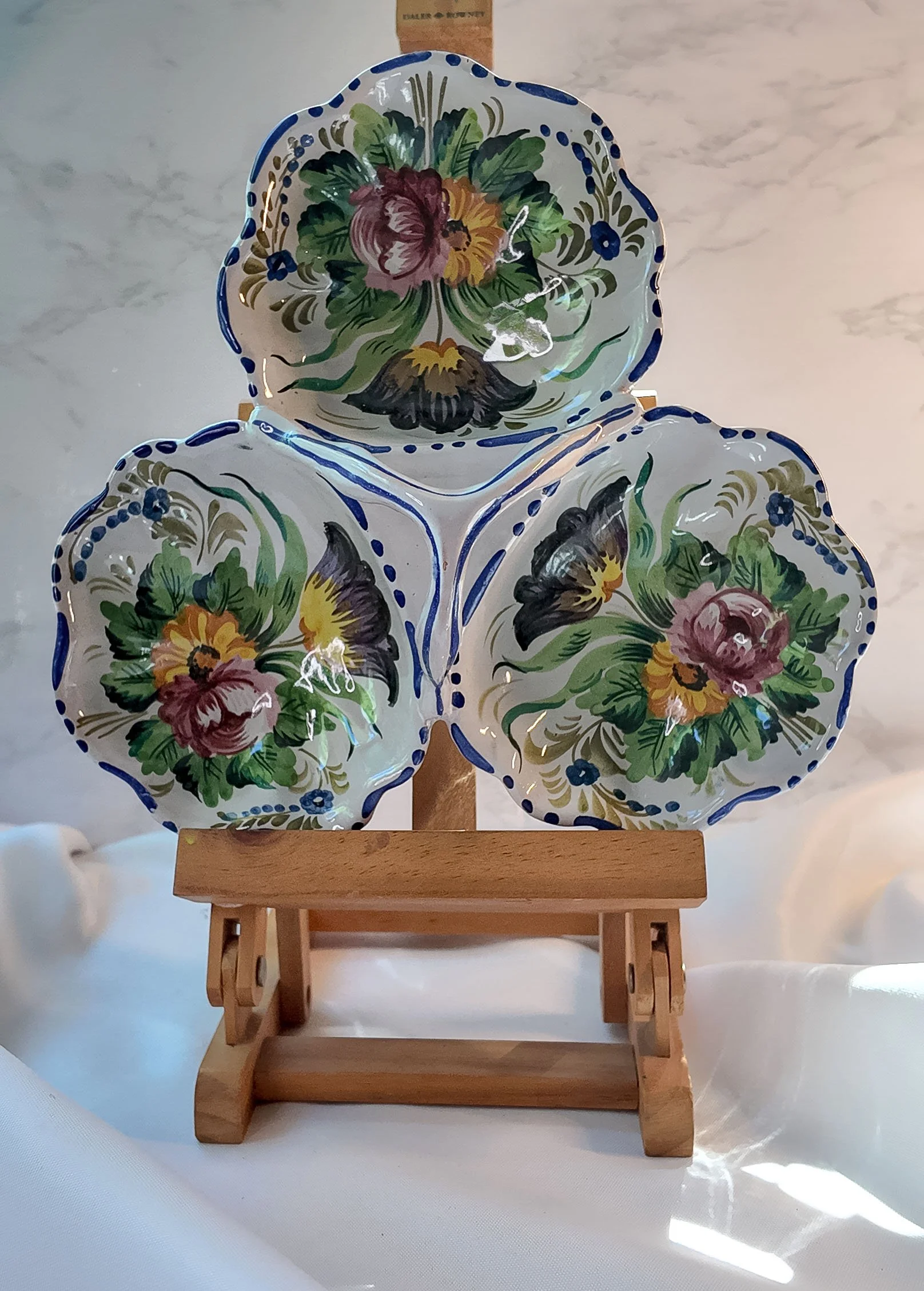
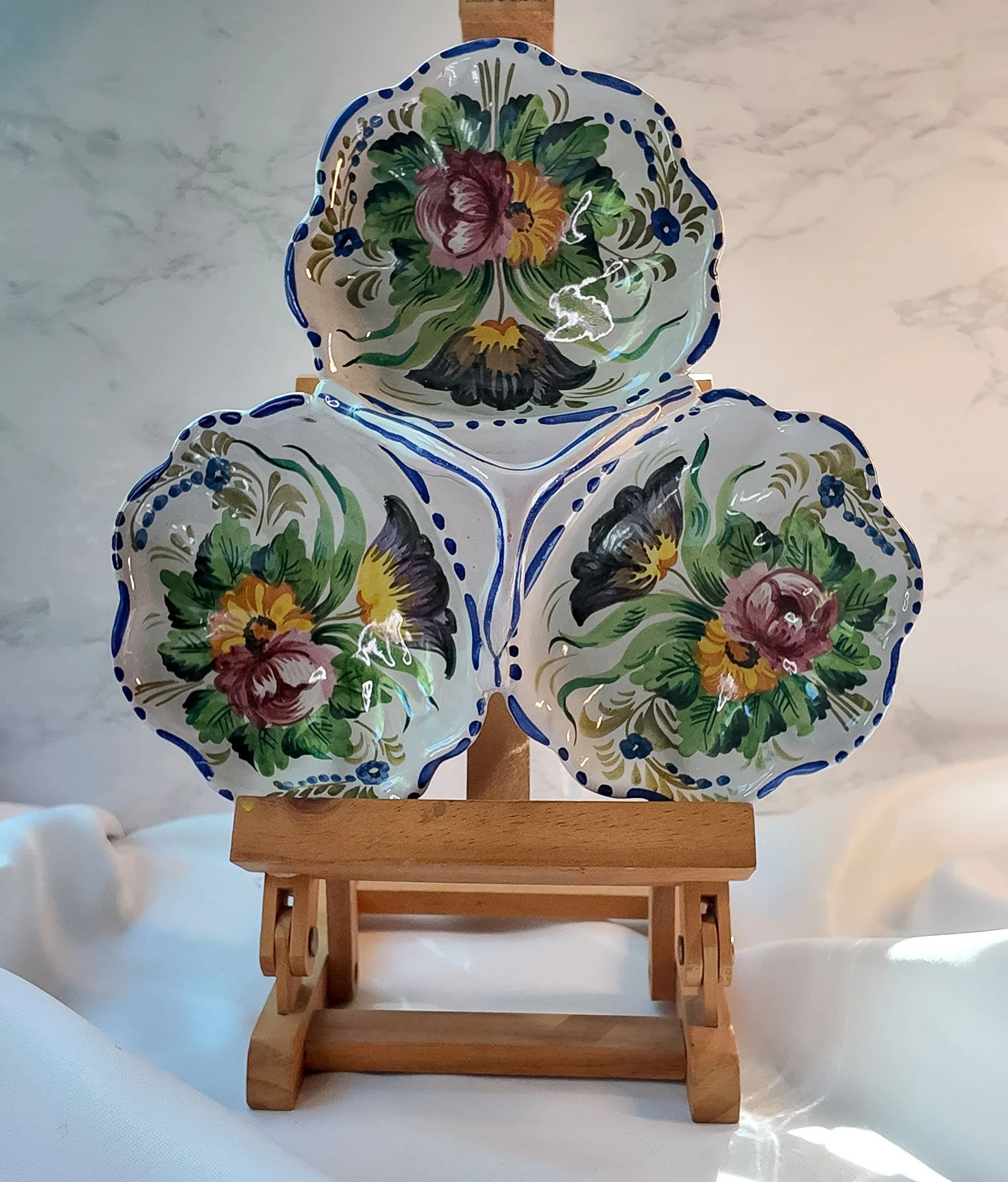
Antique Haviland Limoges Butter Pats Pair, 1882 to 1900 French Porcelain Floral Ring Dishes
Originally made to give each Victorian dinner guest their own pat of butter, these petite French dishes are now perfect as ring dishes, tea-bag rests, salt dishes, tiny catchalls, or elegant place-setting accents.
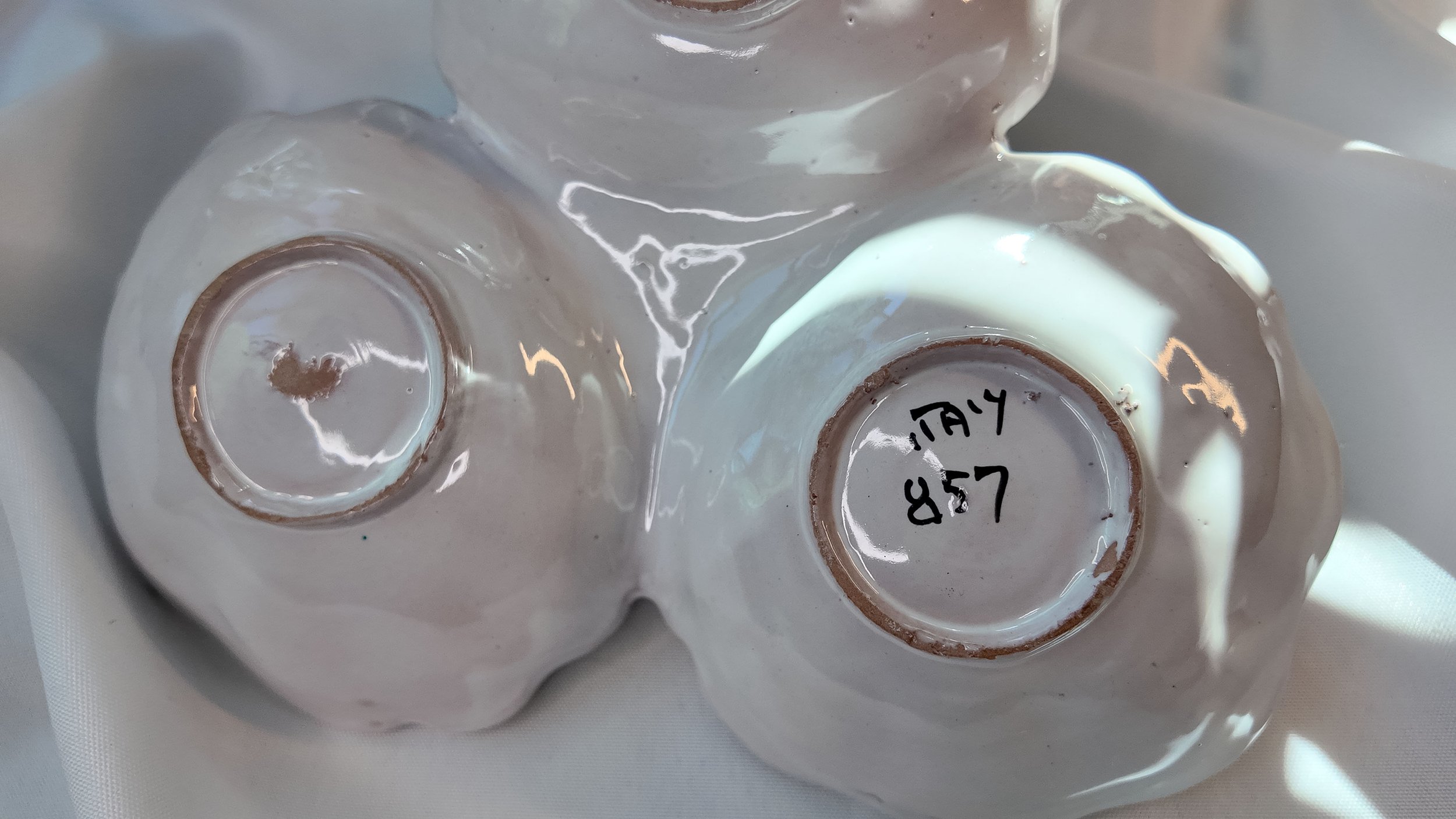
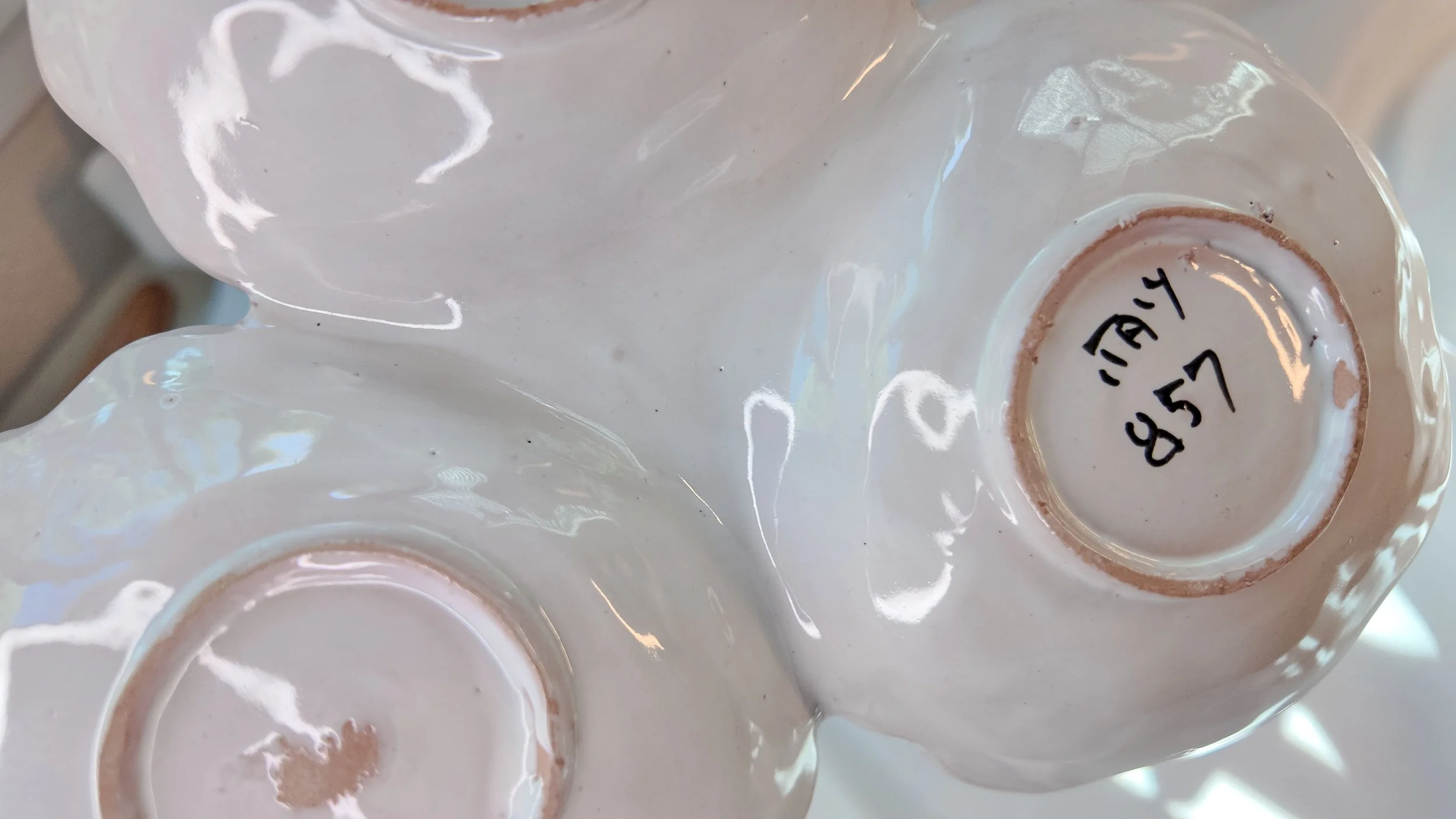
This matched pair was made by Charles Field Haviland and Gérard, Dufraisseix & Morel in Limoges, France, circa 1882 to 1900. Each square dish has softened scalloped corners, delicate botanical decoration, and a fine gold edge. The green factory marks remain visible underneath.
Very good antique condition with light age-related gilding wear and minor surface marks. No chips, cracks, or repairs found. Approx. 4.5 in across and 1 in deep each.
Item details: Subject: matched square butter pats with scalloped corners, botanical florals, and gilt edges. Maker or brand: Charles Field Haviland / Gérard, Dufraisseix & Morel. Era: 1890s. Origin: Limoges, France. Style: late Victorian French porcelain. Materials: Limoges porcelain, gold gilt. Measurements: Approx. 4.5 in across x 1 in deep each. Includes: two antique butter pats. Use and function: originally individual butter dishes; also ideal as ring dishes, tea-bag rests, salt dishes, or tiny catchalls.
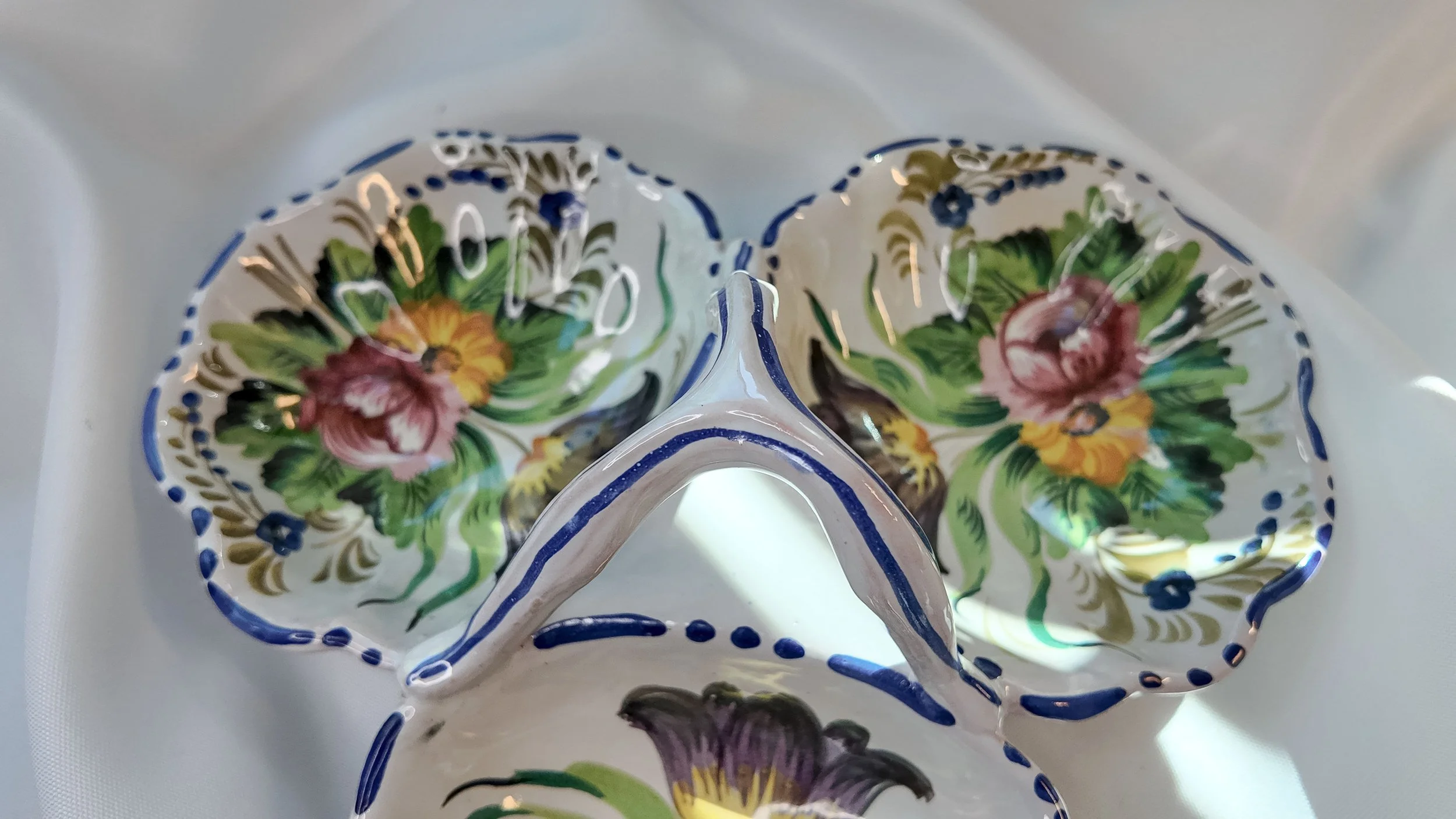
Condition: Very good antique condition with light gilding wear and minor surface marks. No chips, cracks, or repairs found. Faint glaze and kiln variations are original to manufacture. Every known flaw, repair, missing part, or area of wear is described here and shown in the photographs. Please review every image before purchasing.
Packaging: Each dish will be wrapped separately with the corners and gilt rims protected. Reusable and recycled packing materials may be used when they provide the safest protection.
The Wander House sourcing story: Every piece is found by me in person at estate sales, old homes, dusty garages, sheds, and the forgotten corners where worthwhile objects are still waiting. I do not buy ready-to-resell inventory from resale apps. I bring each piece home, clean it, inspect it, research it, photograph it, and choose it because I can still see the life it has left. Prices are kept fair so these pieces can move on, while still helping them reach someone who will value what made them worth saving.
Originally made to give each Victorian dinner guest their own pat of butter, these petite French dishes are now perfect as ring dishes, tea-bag rests, salt dishes, tiny catchalls, or elegant place-setting accents.
This matched pair was made by Charles Field Haviland and Gérard, Dufraisseix & Morel in Limoges, France, circa 1882 to 1900. Each square dish has softened scalloped corners, delicate botanical decoration, and a fine gold edge. The green factory marks remain visible underneath.
Very good antique condition with light age-related gilding wear and minor surface marks. No chips, cracks, or repairs found. Approx. 4.5 in across and 1 in deep each.
Item details: Subject: matched square butter pats with scalloped corners, botanical florals, and gilt edges. Maker or brand: Charles Field Haviland / Gérard, Dufraisseix & Morel. Era: 1890s. Origin: Limoges, France. Style: late Victorian French porcelain. Materials: Limoges porcelain, gold gilt. Measurements: Approx. 4.5 in across x 1 in deep each. Includes: two antique butter pats. Use and function: originally individual butter dishes; also ideal as ring dishes, tea-bag rests, salt dishes, or tiny catchalls.
Condition: Very good antique condition with light gilding wear and minor surface marks. No chips, cracks, or repairs found. Faint glaze and kiln variations are original to manufacture. Every known flaw, repair, missing part, or area of wear is described here and shown in the photographs. Please review every image before purchasing.
Packaging: Each dish will be wrapped separately with the corners and gilt rims protected. Reusable and recycled packing materials may be used when they provide the safest protection.
The Wander House sourcing story: Every piece is found by me in person at estate sales, old homes, dusty garages, sheds, and the forgotten corners where worthwhile objects are still waiting. I do not buy ready-to-resell inventory from resale apps. I bring each piece home, clean it, inspect it, research it, photograph it, and choose it because I can still see the life it has left. Prices are kept fair so these pieces can move on, while still helping them reach someone who will value what made them worth saving.

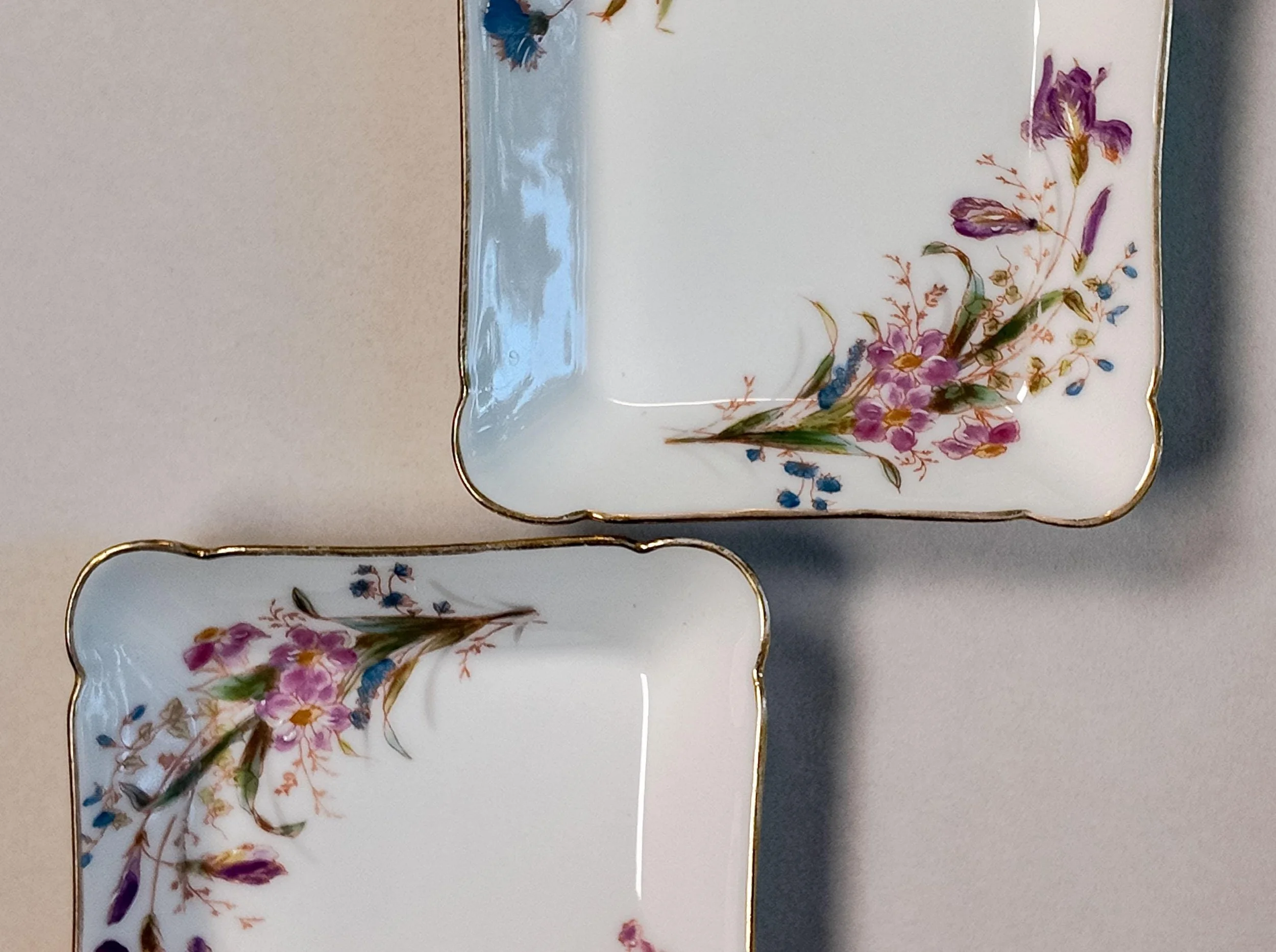 Image 1 of 5
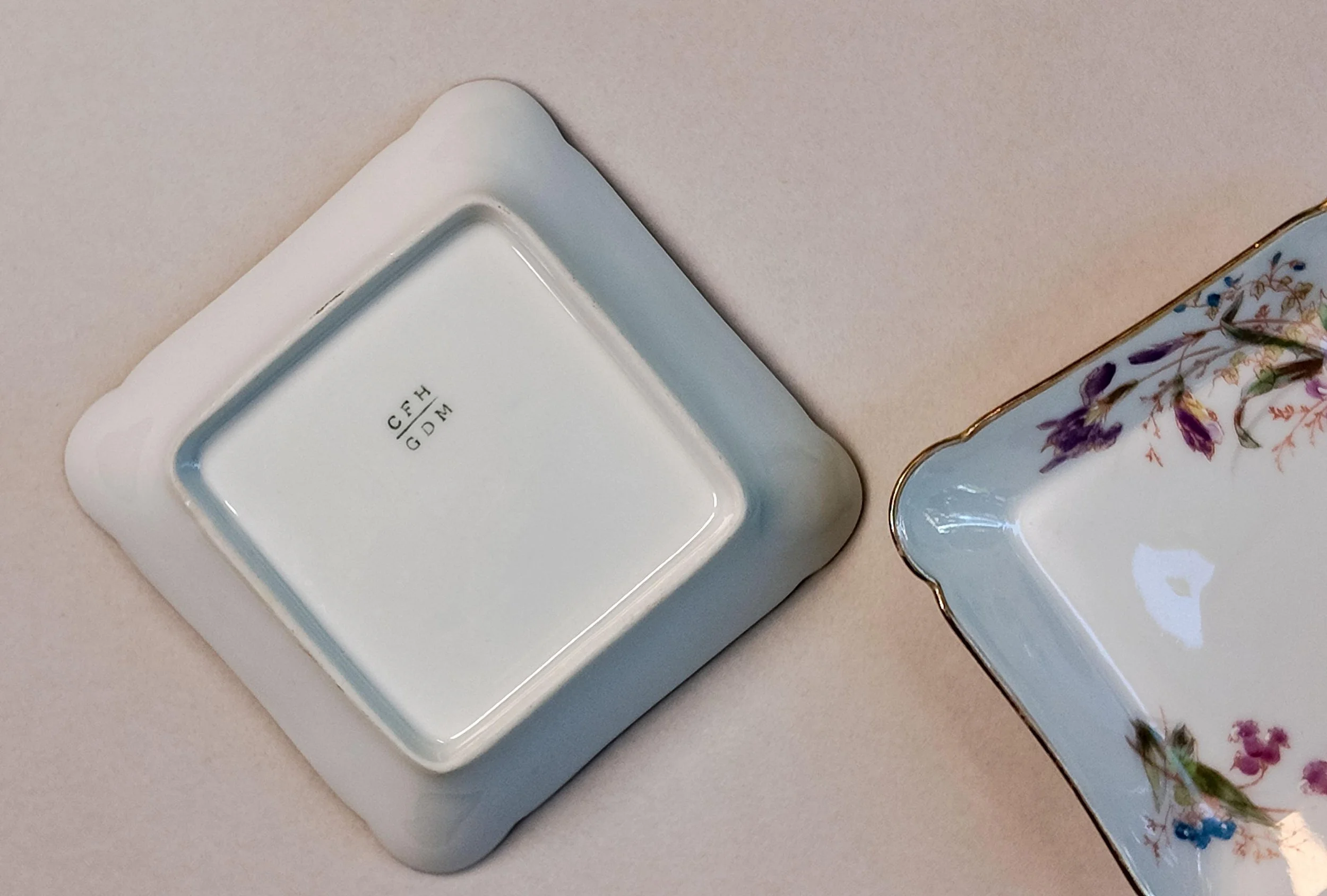 Image 2 of 5
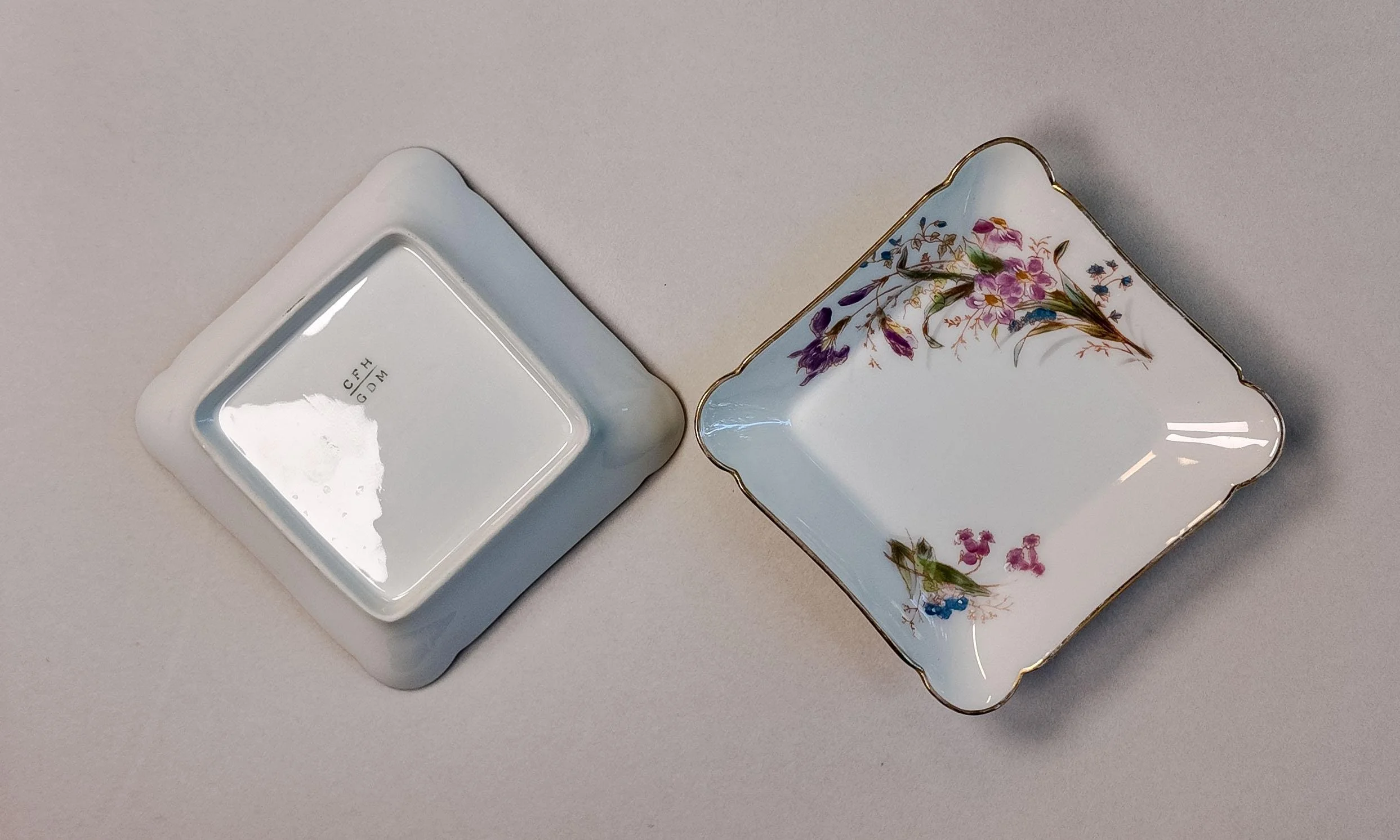 Image 3 of 5
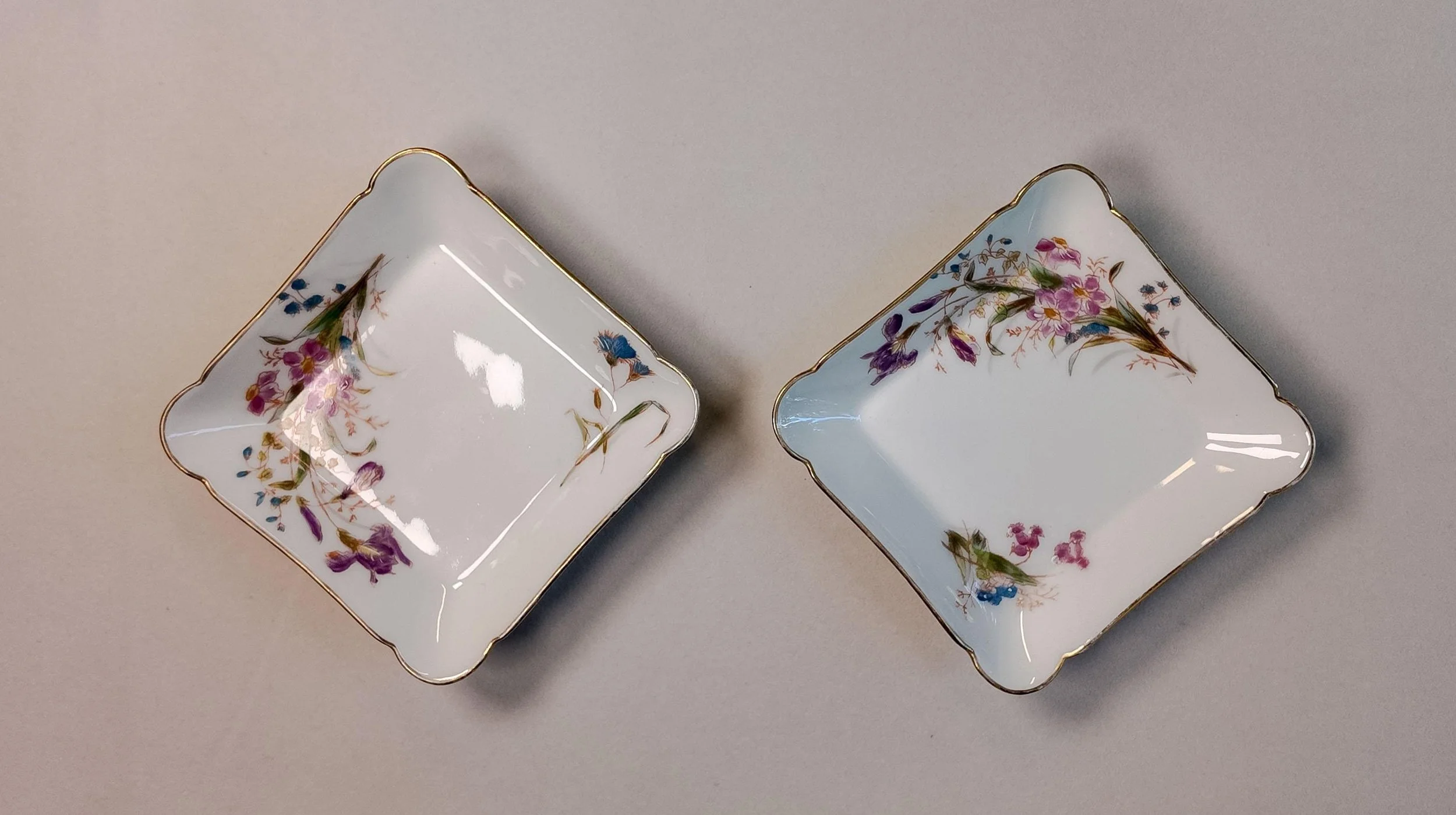 Image 4 of 5
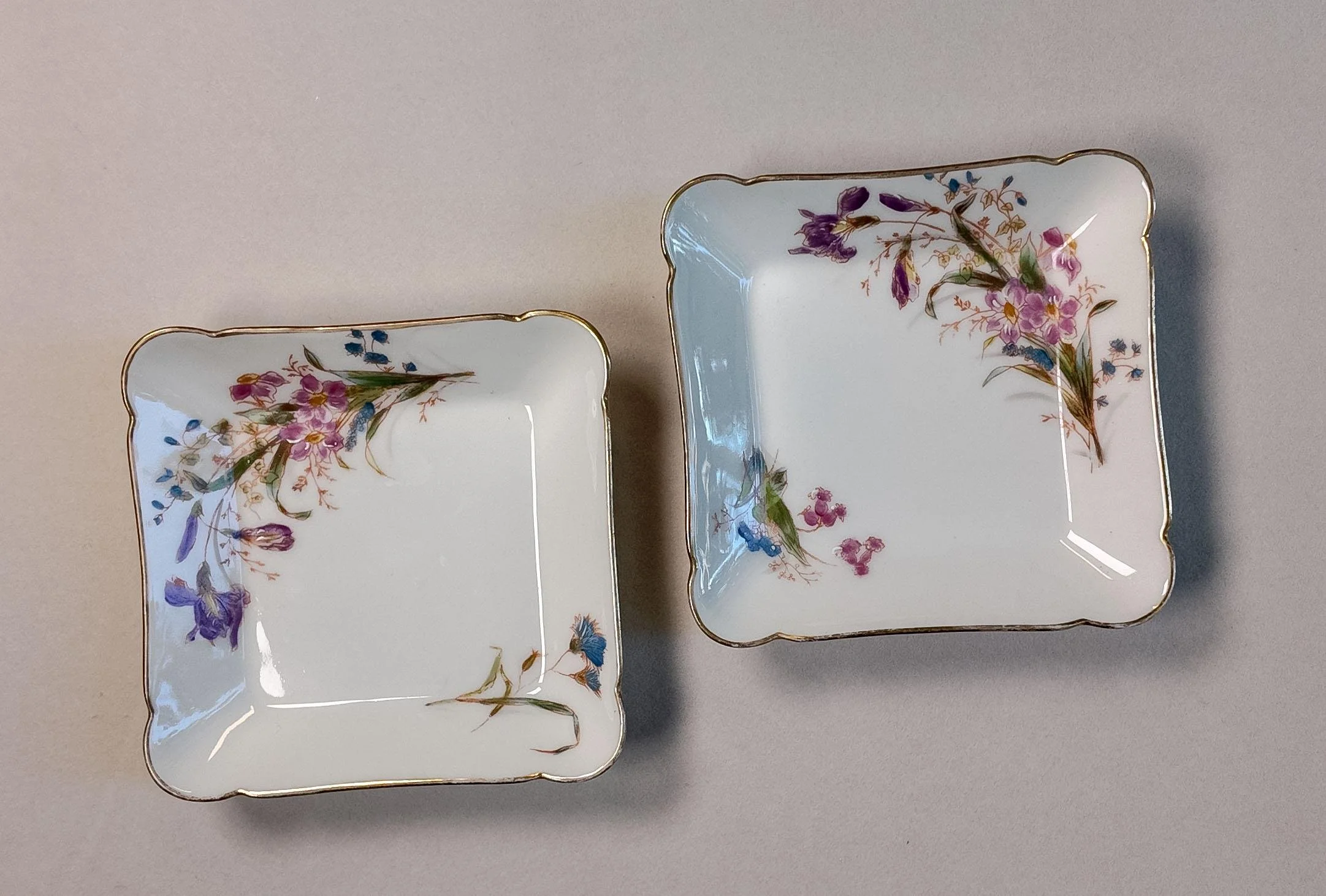 Image 5 of 5